Google just made Demand Gen more serious for advertisers who care about creative scale, creator-led performance, and YouTube-driven demand.
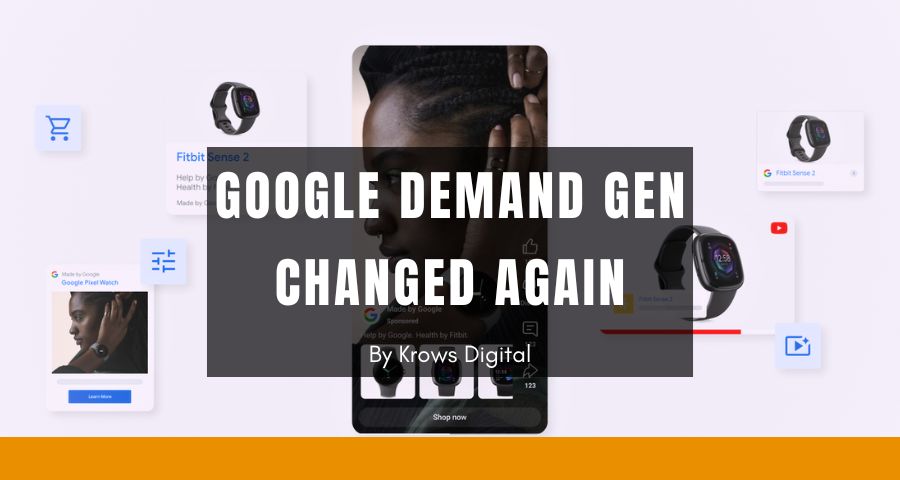
On March 26, Google announced its latest Demand Gen Drop, adding three notable upgrades: Veo-generated video variations from static images, YouTube Creator Partnerships inside Google Ads, and optimization for follow-on views. Google’s own Demand Gen documentation also reminds advertisers that these campaigns are built to drive engagement and action across YouTube, Shorts, Discover, Gmail, and the Google Display Network, which is exactly why this update matters: Demand Gen is increasingly becoming Google’s closest answer to social-style, visually driven paid discovery.
This matters even more in Japan because the market is already moving toward video, social, and platform-native discovery. In its March 2026 annual report, Dentsu said Japan’s total advertising market reached ¥8.0623 trillion in 2025, while internet advertising rose to ¥4.0459 trillion and exceeded 50% of total ad spend for the first time, helped by strong growth in video and social formats. So this is not just a Google feature update. It lines up with where budget, attention, and creative pressure are already going.
What actually changed in Demand Gen
The first update is creative production. Google says advertisers can now use Veo in Google Ads to generate high-quality video variations from static images. Google frames this as a way to scale asset variety and improve the chances of reaching “Excellent” Ad Strength, which makes it especially relevant for teams that have strong image libraries but weak video output.
The second update is creator workflow. Google’s March announcement points to YouTube Creator Partnerships as a more direct way to discover and work with creators from inside Google’s own ad stack. On YouTube’s side, the company says the platform now gives advertisers access to more than 3 million creators in the YouTube Partner Program through Creator Partnerships, while Google Ads Help describes the Creator Partnerships Hub as a place to find creators, review suggested sponsored videos, and track key performance metrics for linked content. Importantly for Krows Digital readers, Google’s support documentation also says Creator Partnerships is available in Japan for eligible advertisers.
The third update is optimization for YouTube channel growth, not just direct response. Google now lets Demand Gen advertisers optimize toward YouTube follow-on views, which it defines as a conversion action for users who watch a channel’s organic videos after seeing an ad for that channel. Google says this is especially useful for brands, retailers, creators, and media businesses that care about deeper channel engagement, not just one isolated paid interaction.
What advertisers should actually test now
A lot of advertisers will read this update and try everything at once. That is usually the wrong move.
The best way to use this release is to turn it into three controlled tests, each tied to a different part of the funnel.
1) Test Veo on your best-performing static assets, not your weakest ones
The smartest use of Veo is not to throw random product images into AI and hope for magic. It is to start with the static assets that have already proven they can stop the scroll, then use Veo to create short video variations that give Demand Gen more motion, more format coverage, and more combinations to work with. That is especially useful for advertisers who already have strong display or social images but do not have the resources to produce fresh short-form video every week. Google’s own framing around improved asset variety and stronger Ad Strength strongly supports that use case. This is our recommendation based on the feature set, not a claim that every AI-generated video will outperform your current creative.
In practice, that means starting with proven winners: best-performing hero product images, top CTR lifestyle visuals, or static assets that already convert in Meta or display. Turn those into testable video variations first. Do not start with low-quality packshots and assume the model will rescue weak creative strategy.
2) Run a real creator-versus-brand creative test on YouTube Shorts
This is probably the most interesting part of the whole update.
Google says creator partnerships boost can turn creator assets into Demand Gen ads, and the company says advertisers saw an average 30% increase in conversion lift on YouTube Shorts when using creator-led videos. That is a strong signal, but it should not be taken as permission to replace your whole video strategy overnight. The better move is to run a clean experiment: one campaign or asset set with your normal brand creative, and one with matched creator-led creative, while keeping budget, targeting, and bidding strategy as consistent as possible. Google Ads Help explicitly recommends this kind of head-to-head creative testing for partnership ads.
This is where the update becomes genuinely practical. A lot of brands already use creators, but the workflow is messy: discovery happens in one place, rights discussions in another, paid amplification somewhere else, and measurement often falls apart. Google is clearly trying to make that path more native to its own ad stack. For brands selling visually, especially in beauty, fashion, wellness, food, lifestyle tech, or ecommerce, this is worth testing now.
3) Use Creator Search instead of random influencer outreach
If you are eligible for Creator Partnerships, the Creator search tab is one of the most useful practical changes. Google says advertisers can search creators by keyword or by YouTube handle, then filter by data points such as audience demographics, subscribers, creator location, engagement, and average views. For brands trying to run performance-minded creator campaigns instead of vague awareness deals, that matters a lot. It brings creator sourcing closer to the logic paid media teams are already used to.
For brands marketing in Japan, the location and audience filters matter even more. Too many foreign teams still choose creators based on aesthetics or follower counts alone. A tool that pushes discovery toward fit and measurable relevance is a healthier direction, even if you still need human judgment and local market knowledge on top.
4) Test follow-on views only if your YouTube channel actually matters
Follow-on views are interesting, but not every advertiser should care.
If your YouTube channel is mostly inactive, or if your business does not benefit from longer research, product education, or repeated brand exposure, then this should not be your first priority. But if you are a brand using YouTube as a trust layer, educational content engine, product explainer hub, or creator ecosystem, follow-on views are worth testing because they let you measure whether paid exposure is increasing organic watch behavior afterward. Google also notes that follow-on views are set to secondary action by default, specifically to avoid accidentally overriding existing conversion priorities. That makes it easier to start carefully.
For many advertisers, the right first step is to monitor follow-on views as a secondary signal before ever optimizing toward them directly. That gives you more insight without forcing the whole campaign toward a softer engagement metric too early.
What this means for advertisers in Japan
The deeper reason this update matters is that it brings three trends together: AI-assisted creative production, creator-led ad delivery, and YouTube-based mid-funnel measurement.
That combination fits where the Japan market is already moving. On Krows Digital, we recently wrote about The Rise of V-Commerce in Japan (2026) and about Rakuten × YouTube Shopping in Japan (2026): What To Do Now. Both articles point to the same structural shift: video is no longer just an awareness format, and creators are no longer just an optional branding layer. Video, trust, discovery, and conversion are starting to merge.
This also lines up with the broader media direction in Japan. As we explained in Japan’s Digital Ad Market Is Still Growing Fast in 2026, the market is being pulled upward by video, social, local platforms, and retail-media-like behavior. Google’s Demand Gen update fits that environment well because it gives advertisers more ways to behave like modern social-commerce brands inside Google’s own ecosystem.
For foreign brands, the mistake would be to treat this as a simple feature rollout and copy U.S.-style creator ads into Japan unchanged. The opportunity is real, but so is the localization challenge. Creator selection, ad tone, product framing, subtitles, landing page trust signals, and post-click clarity still matter enormously in Japan. If you need the broader strategic view, our guide to Paid Advertising in Japan (2026) covers how to think about platform mix, localization, and conversion strategy more holistically.
The practical takeaway
Google’s March 2026 Demand Gen update is not a reason to panic, and it is not a reason to adopt every new feature at once.
It is a reason to get more disciplined.
Start with one Veo creative test based on proven image winners. Add one creator-led Shorts test against your existing brand creative. Measure follow-on views only if YouTube channel growth is strategically relevant. And if you are eligible for Creator Partnerships in Japan, use the search and analytics tools to bring more structure into creator selection and amplification. That is the highest-quality way to turn this product update into actual learning.
Contact Krows Digital
If your team wants help testing Demand Gen properly in Japan, building creator-led paid campaigns, or adapting Google Ads strategy for the Japanese market, contact Krows Digital for an enquiry or review our Google Ads services for SMEs and large enterprises. We can help you structure the tests, localize the creative, clean up measurement, and make sure your funnel does not break after the click.
ready to take your business to the next level?
Get in touch today and receive a complimentary consultation.
FAQ
What is Google Demand Gen?
Demand Gen is Google’s visually focused campaign type for driving engagement and action across YouTube, Shorts, Discover, Gmail, and the Google Display Network. It is designed to give advertisers a more social-style campaign option inside Google Ads.
Are YouTube Creator Partnerships available in Japan?
Yes, Google Ads Help says Creator Partnerships is available in Japan for eligible advertisers. Availability depends on factors such as market support, advertiser verification, and meeting certain spend requirements for some hub features.
What are follow-on views in Google Ads?
Follow-on views are a YouTube conversion action that measures when someone watches a channel’s organic videos after seeing an ad for that channel. Google positions this as a useful metric for brands that care about channel engagement, not only direct conversions.
Should advertisers replace Search or Performance Max with Demand Gen?
Usually no. Demand Gen is better understood as a complementary campaign type for visual discovery, creator-led creative, and upper-to-mid funnel demand creation. Search still captures active intent, and Google’s own product documentation places Demand Gen in a different role from Search and Performance Max.