If Japan is part of your 2026 growth plan, this is one of the most important media changes to prepare for.
LINEヤフー (LY Corporation) has officially confirmed that the new LY Ads Display Ads environment (「LINEヤフー広告 ディスプレイ広告」) starts on April 1, 2026, consolidating the advertising delivery environment across LINE and Yahoo! JAPAN display inventory. You can see the official rollout announcement on the LINEヤフー for Business news page, which outlines what is being integrated, what is being renamed, and what advertisers need to migrate.
For foreign brands, this is not just a platform rename. It changes how you should think about campaign structure, local funnel design, and reporting in Japan.
That matters because Japan is not a simple “Google + Meta” market. Local ecosystems still influence how people discover, compare, and trust brands. At the same time, digital advertising is still growing strongly in Japan. In Dentsu’s annual report on advertising expenditures, internet advertising continued to expand (with video and performance formats driving much of that growth), which is exactly why local platform consolidation matters now for advertisers trying to scale efficiently. You can review the report here: Dentsu – Advertising Expenditures in Japan.
This guide explains what is changing, what gets easier, what gets messy, and what foreign brands should do now versus later.
What is changing with LINE and Yahoo! JAPAN ads?
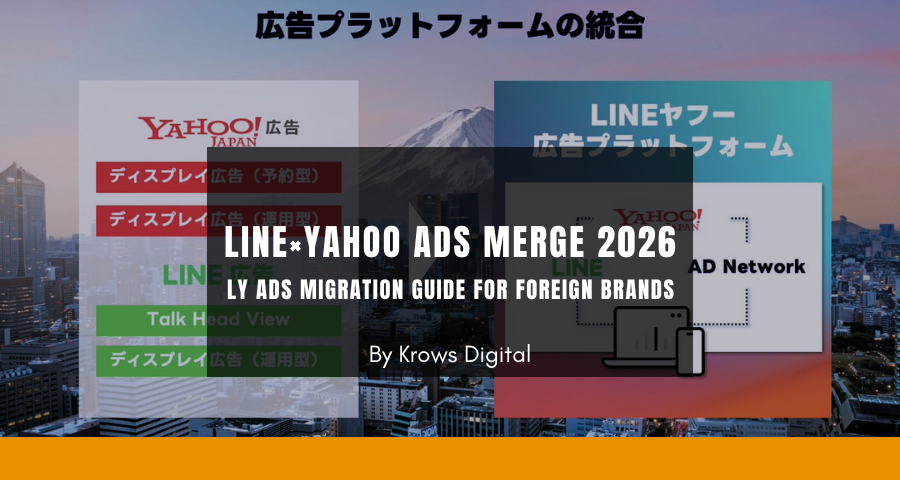
The core change is simple: LINE Ads and Yahoo! JAPAN Display Ads are being unified into a single display advertising environment under LY Ads.
The English-language notice from LINE for Business explains the direction clearly: LINE Ads (including Talk Head View) and Yahoo! JAPAN Ads Display Ads are being integrated into “LY Ads Display Ads”, and Yahoo! JAPAN Ads naming is also being updated under the LY branding.
The Japanese announcement on the LINEヤフー for Business site adds the operational detail advertisers actually need. It confirms that the following are being integrated into the new LY Ads Display Ads environment:
- LINE Ads (including Talk Head View)
- Yahoo! JAPAN Display Ads (auction / reserved inventory)
It also confirms the naming updates (including Yahoo! JAPAN Search Ads moving under LY branding) and, importantly, clarifies the migration impact:
- Yahoo! JAPAN Display/Search advertisers generally do not need the same kind of migration process
- LINE Ads advertisers do need to migrate into the new LY Ads Display Ads setup
That distinction is critical. If your team is actively using LINE Ads today, 2026 is a migration year, not a “wait and see” year.
The key date: April 1, 2026
The official launch date for the new display environment is April 1, 2026 (JST), as stated in the LY Corporation announcement.
There is another date that many advertisers may miss if they only skim the headlines: the same LY announcement indicates that ad delivery on the existing LINE Ads system is planned to stop around late October 2026, with service closure happening in stages afterward. In practical terms, this means advertisers using the current LINE Ads environment should prepare well before Q4.
If your account setup is messy today, waiting too long will make the transition more expensive and more confusing.
Why this matters for foreign brands entering Japan
Most foreign brands enter Japan with a familiar paid media stack: Google Ads, Meta Ads, and maybe TikTok.
That setup can work, but it often misses how Japanese users actually move across local digital environments. Yahoo! JAPAN and LINE are not “secondary channels” in Japan. They are part of how people browse, research, and re-engage with brands, especially in categories where trust and repeated exposure matter.
The LY platform integration strengthens that local ecosystem logic. It pushes brands to stop thinking about LINE and Yahoo! JAPAN display as disconnected tactical channels and instead treat them as part of one Japan-specific media environment.
For Krows Digital, this is usually where the biggest improvements happen:
- cleaner platform roles inside the funnel
- better retargeting logic
- clearer reporting for local and overseas stakeholders
- less duplicated spend across channels
In short, the LY transition is not only a migration task. It is a chance to rebuild your Japan acquisition system properly.
What gets easier after the LY merge
There is a lot of migration anxiety around platform changes, but there are real advantages if you prepare correctly.
Both the LINE for Business integration notice and the Yahoo! JAPAN Ads Developers announcement frame the integration as a way to improve advertiser efficiency and reduce operational complexity over time.
In practice, that should make three things easier.
1) Better operational clarity
Instead of maintaining a long-term split between LINE display planning and Yahoo! JAPAN display planning, your team can build a clearer framework for local display and retargeting.
2) Stronger optimization potential
The LY Japanese announcement also highlights the benefit of consolidating ad delivery data, which can improve optimization and machine-learning performance over time. In other words, this is not just a UI change — it can improve how the platform learns.
3) Cleaner internal reporting
For foreign brands managing Japan from abroad, reporting is often one of the biggest pain points. A unified local display environment should reduce some of the split-platform reporting friction and make dashboards easier to explain internally.
What gets messy during the transition
This is the part most advertisers underestimate.
The platform migration itself is not the hardest part. The hardest part is that it exposes your existing account problems all at once.
1) Tracking gaps become visible
If your conversion setup is weak or inconsistent today, migration will make your reporting noisier. This is especially risky for lead-gen businesses that already struggle to connect ad platform data with CRM lead quality.
2) Naming inconsistencies break reporting
Many accounts evolve over time with inconsistent campaign names, ad set labels, and audience naming. Once naming conventions change under a new platform structure, reporting becomes confusing very quickly unless you standardize.
3) Audience overlap wastes budget
A lot of brands already have overlap between search retargeting, Meta retargeting, and local display audiences. The LY transition does not fix that automatically. You still need a clear segmentation and exclusion strategy.
4) Creative localization gets ignored
A platform merge does not solve weak creative. Japan still responds better to trust-first, clarity-first creative than aggressive or vague global ad styles. If your ads are translated but not localized, performance will stay limited.
What to do now vs. later
Krows Digital’s practical LY migration checklist
The best way to approach this is simple: stabilize first, then scale.
Phase 1 — What to do now (before rollout pressure)
This phase is about reducing risk and avoiding migration chaos.
Audit your tracking and conversions
Confirm your primary conversion actions, where they fire, and whether they actually match your business KPI (qualified lead, call, booking, etc.). Do not rely on “something is tracking.” Make sure your conversion logic is trusted.
Standardize naming across channels
Use one naming structure across Google, Meta, TikTok, and LY-related campaigns. A simple format works best:
Market | Channel | Funnel | Audience | Objective | Language
This makes reporting and troubleshooting much easier during transition periods.
Rebuild audience buckets
Map audiences into clear groups:
- Prospecting
- Retargeting
- Existing customers/leads
- Exclusions
Most budget leaks in Japan happen because retargeting windows overlap and exclusions are incomplete.
Clean your creative library
Organize creative by funnel stage and language. In Japan, “one creative set for everyone” usually underperforms. You will often need different variants for:
- foreign residents in Japan (English)
- Japanese-speaking users
- higher-trust / higher-consideration segments
Save a performance baseline
Before migration changes hit your account structure, export your current performance baseline. You will need a clean “before vs. after” comparison to explain results internally.
Phase 2 — What to do next quarter (after setup is clean)
Once your foundation is stable, use the LY integration as a growth opportunity.
Rebuild your funnel by role, not by platform habit
A stronger Japan media stack usually looks like this:
- Google / Search Ads for high-intent demand capture
- LY display inventory for local reach and retargeting
- Meta / TikTok / YouTube for trust-building and creative testing
- LINE-based CRM follow-up where relevant to your business model
This is stronger than running isolated campaigns by platform.
Localize messaging properly
Localization in Japan is not just translation. It is messaging design.
In many categories, Japanese users respond better to:
- calm confidence
- visible proof
- clear offers
- lower-friction CTAs
This applies to both ad creative and landing pages.
Improve reporting beyond platform dashboards
Track what matters across the funnel:
- media spend
- qualified leads
- cost per qualified lead
- downstream outcomes (if available)
Japan often requires more trust-building touchpoints than other markets, so last-click-only thinking can distort your decisions.
Run controlled tests, not chaotic changes
Do not change everything at once. Start with a test roadmap:
- one audience structure test
- one creative format test
- one landing page test
- one budget allocation test
That keeps the migration measurable and performance-focused.
Common mistakes to avoid during the LY transition
The first mistake is waiting until the migration feels urgent.
The second mistake is treating this as only a technical update. It is also a strategy and reporting reset.
The third mistake is assuming global campaign best practices will work the same way in Japan. They often need adaptation.
The fourth mistake is overengineering the process. You do not need a complex enterprise framework. You need a clear checklist, one owner, and disciplined execution.
Final takeaway
The LINE×Yahoo shift is one of the most important practical media changes in Japan for 2026.
If you prepare early, it becomes an advantage:
- cleaner tracking
- stronger local funnel design
- better reporting
- fewer surprises during migration
If you wait, it becomes a rushed cleanup project while campaigns are already running.
At Krows Digital, we help foreign brands and local teams build Japan-specific acquisition systems across Google, Meta, TikTok, YouTube, and the LINE/Yahoo! JAPAN ecosystem. If your team needs support with LY migration prep, tracking cleanup, audience restructuring, or creative localization, we can build a practical rollout plan and execute it with your team.