
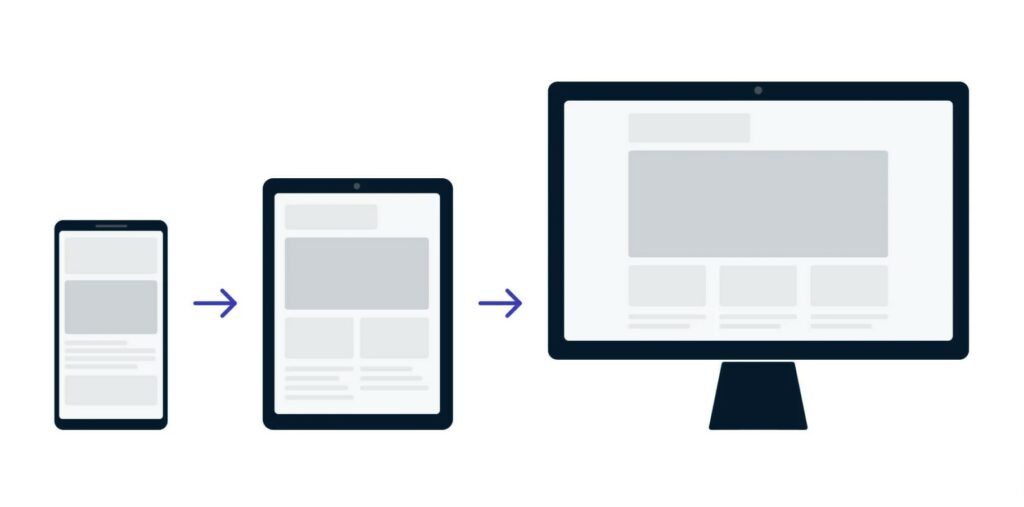
If you’re marketing in Japan, “mobile-first” isn’t a trend—it’s the default. The difference in 2026 is that mobile discovery is being reshaped by AI-driven search experiences, and brands that treat mobile-first as “just responsive design” are losing conversion (and wasting spend).
Here’s the baseline reality:
Japan has more mobile connections than people (multiple SIMs/devices per user). According to DataReportal – Digital 2026: Japan, Japan has roughly 193M mobile connections, or about 157% of the population. And device usage data from the Statistics Bureau of Japan – Statistical Handbook of Japan 2025 shows smartphones are the dominant device for internet access across working-age groups.
But “mobile-first” in 2026 is no longer only a UX/SEO topic. It’s also a Search behavior topic.
In late January 2026, Google expanded the ability to ask follow-up questions directly from AI Overviews—pushing users into AI Mode, which makes search feel more conversational (and happens heavily on mobile). See Google’s update: “Just ask anything: a seamless new Search experience”.
So the mission today isn’t just “rank on mobile.” It’s:
Win the first impression inside AI summaries — and convert the ‘proof click’ when the user needs reassurance.

What changed since the “old” mobile-first era
1) Mobile-first indexing is the baseline (not optional)
Google has been moving the web to mobile-first indexing for years, and has made clear that smartphone crawling is the default for indexing. If your mobile experience is missing content or broken, you’re not “a bit behind”—you’re making it harder for Google to understand and rank your site. See Google Search Central – Mobile-first indexing.
2) “Speed” evolved into “real interactivity” (INP matters)
Core Web Vitals shifted from FID to INP (Interaction to Next Paint)—which measures how responsive your site feels during real actions (menu taps, filters, add-to-cart, form submission). This matters hugely on mobile because Japanese users expect the experience to feel “instant.” Reference: web.dev – INP becomes a Core Web Vital.
3) AI Search increases “no-click pressure,” which raises the value of trust assets
If AI Overviews answer basic questions, fewer people will click early. When they do click, they’re often deeper in the journey—looking for proof: pricing clarity, policies, reviews, legitimacy cues, and process explanations.
Google has already published guidance for how site content connects to AI search experiences: Google Search Central – AI features and your website.
Japan-specific mobile behavior foreign brands must design for
This is where many foreign brands still underperform in Japan: they build a globally “good” mobile experience, but not a Japan-native one.
1) LINE is not just “a channel.” It’s a trust layer.
For many categories (beauty, services, high-consideration products), people don’t convert on first exposure. LINE helps you create the reassurance loop: updates, reminders, support, and repeat touchpoints that reduce perceived risk.
LINE’s own business materials highlight its domestic scale (MAU), which explains why it’s so foundational in Japan: see LINE for Business – LINE Official Account overview.
Mobile-first in Japan often means:
- a one-tap “Add on LINE” entry point
- LINE-friendly landing pages (short, proof-first, FAQ visible)
- a retargeting strategy that treats “repeat exposure” as the conversion engine
2) Marketplaces shape “price truth” even when you don’t sell there
In Japan, many buyers validate value by checking marketplaces and reviews, even if they plan to buy on your site. That behavior influences which product photos feel trustworthy, which keywords feel “normal,” and what price points are seen as reasonable.
The practical move: use marketplace listings as a mobile intent research tool, then apply the language and photo conventions to your PDPs, ads, and FAQ.
3) Cashless expectations keep rising, so mobile friction hurts more
Japan’s cashless ratio continues to rise (and it’s now a mainstream consumer expectation). METI reported a 42.8% cashless payment ratio in 2024: see METI (EN) – Cashless payment ratio release.
You don’t need every payment method under the sun, but you do need:
- clean checkout UX on mobile
- visible delivery/returns policies
- short forms and immediate confirmation

The 2026 mobile-first playbook for Japan
Step 1: Build “proof-first” mobile pages (Japan trust dynamics)
On mobile, your first screen has one job: answer “Is this safe and clear?” fast.
Within the first screen, we want:
- a clear statement of what you do (not vague branding)
- one proof cue (reviews, years in market, results, partners, press)
- one action (buy, book, inquire, consult)
- clear “what happens next” (delivery/booking/process)
Step 2: Make speed a revenue lever (not a dev KPI)
Speed isn’t only SEO. Slow pages burn ad budget and destroy intent.
Google references research indicating 53% of mobile visits may be abandoned if load time exceeds ~3 seconds: see Google – page speed and abandonment note.
Practical priorities:
- compress images (especially hero images)
- remove script bloat (excess tags, heavy widgets)
- avoid heavy sliders and autoplay elements
- test on mid-tier Android devices (realistic Japan scenario)
Step 3: Design for the “AI summary → proof click” journey
Because search is becoming conversational via AI Overviews/AI Mode (Google update), your page must be easy to summarize and easy to trust.
We recommend:
- short “answer blocks” near the top (clear definitions)
- structured headings for pricing, steps, eligibility, locations
- FAQs written in real customer language
- schema (Article + FAQPage) to make extraction cleaner
Step 4: Build Japan-native funnels
The mobile funnel that repeatedly works in Japan looks like this:
- Search captures intent (Google Search / Maps / high-intent queries)
- Social + LINE builds trust (short proof content + repeat touchpoints)
- Retargeting closes (proof creative + clarity + low-friction action)
If you skip step 2 (trust), you’ll overpay in step 3.
Step 5: Measurement + privacy awareness (practical)
Our standard base stack:
- GA4 + GTM clean install
- Purchase/lead event mapping tested on mobile
- Deduplication (avoid double conversion firing)
- Consolidated reporting focused on qualified leads / ROAS
For privacy, the practical point is: be clear about what you collect and how you share it. Start from official guidance: PPC (Japan) – official site and the official law translation portal for APPI: Japanese Law Translation – APPI.
Let us do the hard work for you!
If you want us to audit your mobile funnel for Japan (UX + tracking + paid media + AIO readiness), reach out to Krows Digital. We’ll give you a prioritized action plan you can execute immediately.
FAQ (keep this on-page for SEO + AIO)
Q1) What does mobile-first mean in Japan in 2026?
It means designing for mobile discovery and mobile trust: fast pages, proof-first messaging, low friction, and often a trust loop via LINE—plus content structured so it performs in AI-driven search experiences.
Q2) Why does AI search change mobile strategy?
Because AI Overviews can reduce early clicks. When users do click, they’re often looking for proof. So your page must be easy for AI to summarize (clear structure) and strong enough to convert the later “proof click” (policies, reviews, steps, credibility).
Q3) What speed metrics matter now?
Core Web Vitals still matter, and INP matters more than ever because it measures real interactivity—how fast the site responds when users tap and scroll. See web.dev on INP.
Q4) How does LINE impact mobile-first strategy in Japan?
LINE functions as a trust bridge and retention channel. For many categories, “Add on LINE” + consistent updates/support reduces friction and improves conversion rate over time. See LINE Official Account overview.
Q5) Do marketplaces affect brands that don’t sell there?
Yes. Marketplaces influence price anchoring, review expectations, and the keywords people use. Smart brands use marketplace behavior to improve ads, landing pages, and product photography.