In Japan, ecommerce discovery has always been platform-first. People search inside marketplaces, compare reviews obsessively, and “verify” before they buy.
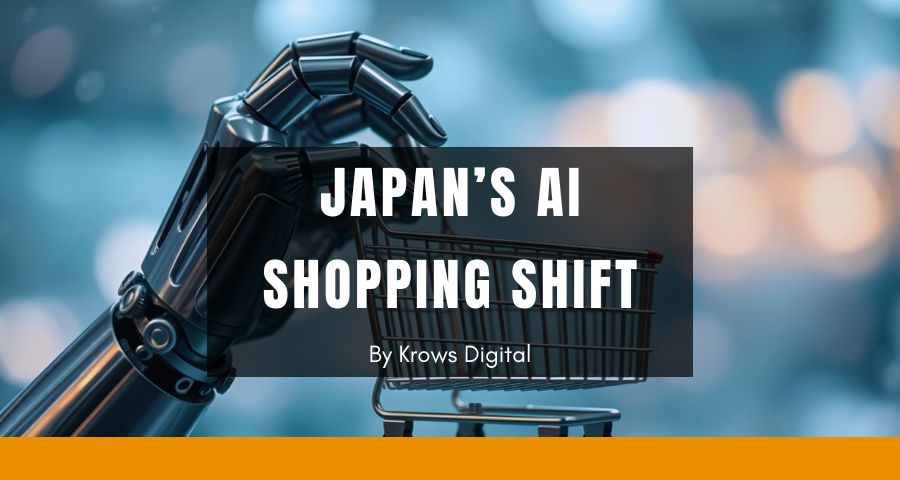
In late February 2026, LINE Yahoo pushed that behavior one step further: it introduced a generative-AI feature inside Yahoo! Shopping that helps users throughout the full shopping journey, from choosing products and comparing options to checkout and even post-purchase support.
This is not just a UI update. It’s a structural change in how product discovery and persuasion will work on one of Japan’s biggest ecommerce ecosystems. If your brand sells in Japan (or plans to), you now have to optimize not only for “search results” and “product pages,” but also for AI-mediated recommendations.
Below is the practical playbook: what changed, why it matters, and what foreign brands should do right now to win visibility and conversions in this new “agentic shopping” layer.
What exactly launched
1) Yahoo! Shopping Agent (AI inside Yahoo! Shopping)
On Feb 25, 2026, LINE Yahoo announced a new feature for Yahoo! Shopping where generative AI supports shoppers across the end-to-end purchase experience. It’s designed to help users even when their intent is vague, by guiding them through clarifying conditions, comparing options, proposing deals, and supporting steps after purchase such as delivery confirmation.
Marketing implication: the “product discovery conversation” can now happen inside the marketplace, not on your website, not on Google, and not only through classic filters.
2) Shopping AI inside Yahoo! Search is expanding too
A few days earlier, LINE Yahoo also expanded the categories covered by its Yahoo! Search “shopping AI assistant,” adding a large number of categories (including everyday shopping categories).
Marketing implication: AI-supported product selection is becoming a platform standard, not an experiment.
Why this matters for marketing in Japan
1) The funnel becomes “conversation-first”
Traditional ecommerce funnel logic is:
Search → click → product page → compare → buy.
AI agent logic is:
Ask → clarify → shortlist → compare → buy.
That shift changes what wins.
In a conversation interface, the AI has to “decide” which products to recommend and why. Brands that provide clear, structured signals (pricing, reviews, specs, availability, and trusted positioning) are more likely to show up in those shortlists.
2) “Verification” becomes even more compressed
Japanese shoppers already verify heavily. AI can compress that verification into a summary and recommendation. The brands that look trustworthy in the data get surfaced faster.
This means your marketing is no longer only creative and bidding. It’s also your product information quality and your proof stack.
3) You now have a new optimization surface: “AI-ready merchandising”
If the AI agent is comparing products, then:
- titles matter more
- attributes matter more
- review volume and sentiment matter more
- price competitiveness and consistency matter more
- shipping clarity matters more
For brands, this is merchandising and marketing merging into one system.
The 2026 playbook: how to win when shoppers use an AI agent
Step 1: Fix your product data like your visibility depends on it (because it does)
If you sell via marketplaces or plan to, treat product data as a growth lever, not admin work.
What to tighten:
- Product titles that match how Japanese users describe the item (not internal naming)
- Clear variants and sizes (avoid confusing naming across SKUs)
- Consistent category placement
- Accurate attributes that help comparison (materials, scent notes, capacity, origin, use-case, compatibility, etc.)
- Shipping/return clarity where applicable
Why: AI-assisted shopping depends on comparability. The clearer your data, the easier it is for the platform to recommend you.
Step 2: Build the “proof stack” that Japanese shoppers (and AI) can trust
In Japan, proof beats hype. Under an AI layer, proof becomes the data the model summarizes.
Prioritize:
- Review volume and freshness (not only average rating)
- Verified purchase signals where possible
- Clear brand story with credibility anchors (awards, chef usage, press mentions, partners)
- Transparent policies that reduce perceived risk
If you’re a foreign brand, trust is often the bottleneck. AI agents will amplify whatever trust signals exist (or don’t).
Step 3: Stop sending generic traffic to generic pages
When platform AI improves marketplace discovery, your off-platform traffic (Meta, Google, influencer) must be more intentional.
Instead of “drive traffic to the homepage,” drive:
- hero product pages
- best-seller collections
- giftable bundles
- “how to choose” landing pages (especially for premium categories)
This aligns with how AI shortlists: it favors clarity and easy comparison. Your landing pages should behave the same way.
Step 4: Plan for “marketplace research behavior,” even if you don’t sell there
A Japan reality: even when customers buy on your site, they often research on marketplaces first.
AI inside Yahoo! Shopping makes that research easier, meaning it will happen more.
So even if you are DTC-first:
- monitor marketplace pricing and positioning (don’t get undercut or misrepresented)
- ensure your brand presentation is consistent
- watch which keywords and photos competitors use to convert
This is brand intelligence you can feed back into ads, creatives, and on-site copy.
Step 5: Re-think creatives for “agentic commerce”
AI agents don’t “feel” your cinematography. They respond to structured product signals and user feedback.
So creatives should do two jobs:
- generate interest
- pre-answer questions the AI would ask users to clarify
Practical creative angles that work well for Japan:
- “for who / for what moment” (gift, daily ritual, office, travel, seasonal)
- comparison-friendly claims (what makes it different, in specifics)
- proof-led storytelling (process, quality control, sourcing, craftsmanship)
- clear usage and outcomes (not exaggerated, not vague)
Step 6: Measurement: shift from “click performance” to “decision performance”
When discovery is AI-mediated, last-click thinking becomes less useful.
Track:
- assisted conversions (if available)
- branded search lift (Google + Yahoo)
- repeat sessions and time-to-conversion
- retargeting pool growth and conversion rate
- email/LINE capture as mid-funnel proof (if applicable)
In Japan, the conversion path is rarely one-touch. AI layers will make it even more multi-touch.
What foreign brands should do this month
If you’re entering Japan in 2026, the simplest “do this now” checklist is:
- Audit your product data quality (titles, attributes, variants, pricing consistency)
- Strengthen proof signals (reviews, policy clarity, credibility anchors)
- Tighten landing destinations in paid traffic (best-seller/hero/gift pages, not generic pages)
- Add a “comparison-friendly” content layer (how to choose, what’s different, for who)
- Set tracking and reporting to measure trust-building, not just clicks
How we help at Krows Digital
If your plan for Japan is “run ads and hope,” you’ll get traffic but not pull.
We help brands build Japan growth systems that match how people actually buy:
- paid acquisition strategy (Meta + Google, and Japan-local platforms when relevant)
- creative testing built around proof and persuasion
- product page and landing page conversion structure (trust-first)
- measurement that focuses on qualified outcomes, not vanity metrics
If you want, reach out and we’ll map a 30-day Japan launch plan based on your category, price point, and channel mix.
ready to take your business to the next level?
Get in touch today and receive a complimentary consultation.
FAQ
What is Yahoo! Shopping Agent?
It’s a new feature announced by LINE Yahoo where generative AI assists users across the full shopping journey inside Yahoo! Shopping, from product selection and comparison through purchase and post-purchase support.
Does this replace SEO or marketplace optimization?
No. It makes them more important. AI agents rely on structured product data, reviews, and clear comparison signals. The better your listings and proof, the more likely you are to be recommended.
What should foreign brands prioritize first?
Product data quality and proof signals. In Japan, trust is the conversion multiplier, and AI will amplify whichever trust signals exist.
How does this affect paid ads in Japan?
Paid ads still matter, but sending generic traffic to generic pages becomes less efficient. Ads should drive to high-intent, comparison-friendly destinations and build retargetable audiences.
Is Yahoo! Search also adding AI shopping support?
Yes. LINE Yahoo expanded categories supported by its Yahoo! Search shopping AI assistant shortly before the Yahoo! Shopping agent announcement.