When people talk about “great marketing,” they often think of flashy campaigns, celebrity endorsements, or trend-led drops.
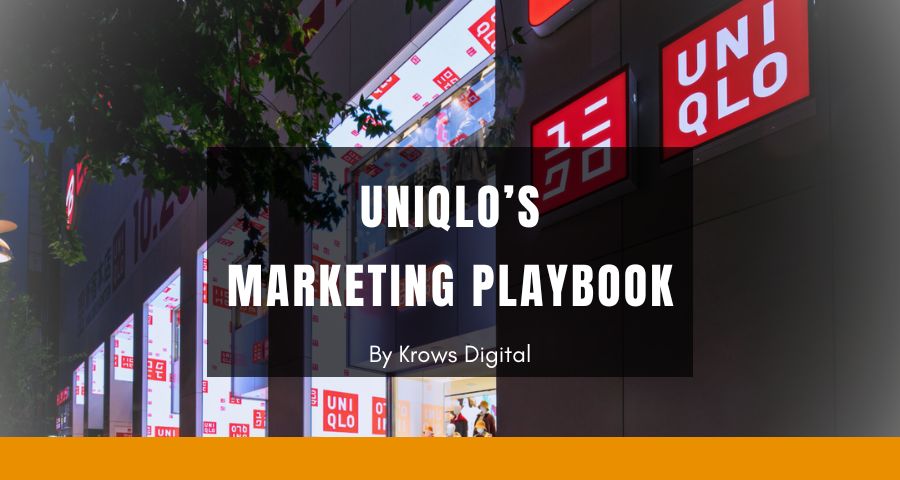
UNIQLO built one of Japan’s most successful global brands by doing almost the opposite.
They took “basics” — the most commoditized category in apparel — and turned it into a scalable strategy: simple products, consistent messaging, and relentless execution. But the brand’s success is not “just operations.” UNIQLO also made several marketing moves that were quietly ahead of their time.
If you’re a foreign brand entering Japan (or a Japanese company trying to modernize its marketing), UNIQLO is a masterclass in how to win through clarity, product truth, and system design.
This article breaks down UNIQLO’s most interesting marketing backstory moves — and what founders can copy today.
The short story
UNIQLO’s growth playbook is built around three pillars:
- Product innovation as marketing (HEATTECH is a case study)
- A brand philosophy that scales globally (LifeWear)
- Digital creativity that earned global attention early (UNIQLOCK)
Each of those moves is documented publicly by UNIQLO / Fast Retailing and partners — and each offers practical lessons for marketing in Japan.
Move #1: UNIQLOCK — the “viral marketing” moment most brands forget
Before TikTok trends and Reels hooks, UNIQLO ran one of Japan’s most famous early digital marketing experiments: UNIQLOCK.
UNIQLOCK was not a standard ad campaign. It was a piece of interactive media — a blog widget that combined music, dance, and a clock, designed to spread across the internet and communicate visually across languages.
Fast Retailing describes UNIQLOCK as part of UNIQLO’s global promotion, first launched in June 2007 and intentionally designed to “transcend language barriers” through a simple visual format (music × dance × clock). Their official announcement also notes that when a second version launched in October 2007, it had been embedded 33,481 times across 73 countries — which is an early version of what we’d now call “distribution through user embedding.” See the original details in Fast Retailing’s UNIQLOCK award release: UNIQLOCK wins Best of Show in One Show Interactive (Fast Retailing).
UNIQLOCK also won major international creative awards — including Best of Show and two Gold awards at One Show Interactive, according to the same Fast Retailing release. That matters because it wasn’t “a Japan-only stunt.” It positioned UNIQLO as a brand that understood the internet as a global distribution layer.
Why this matters for marketers (Japan lesson)
Japan is a high-trust market — but it’s also a market where format innovation can break through the noise when executed cleanly.
UNIQLOCK wasn’t loud. It was playful, repeatable, and shareable in a way that fit internet behavior at the time.
If we translate that lesson to 2026:
- Don’t chase every platform trend
- Build one repeatable format that your audience wants to share or save
- Make it visually understandable without heavy explanation
- Use distribution mechanics built into the platform (embedding then; saves/shares now)
For Krows Digital clients today, the equivalent is often:
- a recurring “Japan marketing myth vs reality” short series
- a saveable checklist format
- a consistent hook structure that turns viewers into retargeting audiences
Move #2: HEATTECH — turning product innovation into a marketing engine
Many brands rely on marketing to create demand for “normal products.”
UNIQLO did the reverse: they created products that generate their own marketing momentum because the value proposition is simple and demonstrable.
The best example is HEATTECH.
Toray — UNIQLO’s innovation partner — states that UNIQLO started marketing HEATTECH in 2003 and later formed a strategic partnership with Toray in 2006, including shared multi-year targets. This is described in Toray’s own corporate history: Toray history: HEATTECH and UNIQLO partnership.
Fast Retailing also published a partnership update describing Toray and UNIQLO’s strategic cooperation and product development direction: Toray × UNIQLO strategic cooperation products (Fast Retailing).
Here’s the marketing lesson hiding inside this business story:
HEATTECH is not “a fabric feature.” It’s a product narrative that customers can understand instantly:
- warmer
- lighter
- wearable daily
- affordable
That turns product adoption into word of mouth and makes seasonal campaigns easier. You’re not convincing people to buy a story — you’re helping them adopt a useful solution.
Why this matters for founders entering Japan
Japan buyers often ask: “Is it reliable? Is it worth it? Will it do what it says?”
Product truth matters more here than exaggerated claims.
UNIQLO’s HEATTECH play shows how to win Japan with:
- a clear “why”
- repeatable seasonal messaging
- and visible proof (materials, performance, comfort)
In marketing terms, HEATTECH is a brand asset that compresses the customer decision cycle. That’s why the brand can scale globally while staying consistent.
Move #3: LifeWear — a brand philosophy built for global scale
A lot of brands try to grow by adding more trend-led lines.
UNIQLO grew by standardizing something harder: a brand philosophy.
UNIQLO officially “unveiled the LifeWear concept” in 2013, according to Fast Retailing’s Annual Report content describing their history and evolution. The same document frames LifeWear as a concept that accelerated global expansion and pushed the company toward a “digital consumer retail” model. See: Fast Retailing Annual Report: LifeWear history and 2013 launch.
LifeWear works as a marketing strategy because it gives UNIQLO:
- a consistent product language
- a consistent creative tone
- and a consistent reason to exist beyond price
It also solves a key problem for international brands: localization without losing identity.
Instead of “we are Japanese fashion,” the message becomes:
- simple
- functional
- constantly evolving
- made for everyday life
That’s scalable across countries.
Why this matters for foreign brands entering Japan
Many foreign brands fail in Japan because they have no coherent philosophy in Japanese context. They have product features, but no reason-to-believe that fits local expectations.
LifeWear is not just brand copy — it’s a decision system:
- what products to prioritize
- what creative tone to use
- what not to do (too trendy, too noisy, too hype)
For founders: you don’t need to copy LifeWear. You need your own “LifeWear-level” clarity:
- what you stand for
- why you exist
- and what the customer can count on every time
Move #4: Store experience + “category worlds” (UT is a case study)
UNIQLO also understood something many digital-first brands forget:
Marketing is not only ads. In Japan, stores are media.
One interesting example is how UNIQLO treated UT (graphic T-shirts) as a cultural product rather than “just apparel.” UNIQLO published behind-the-scenes content about the UT Store Harajuku concept and its role in brand storytelling. See: UT STORE HARAJUKU behind the scenes (UNIQLO press content).
This matters because Japan is a market where “subculture signals” and community affiliation still drive purchasing. UT became a bridge between:
- pop culture
- licensing
- and wearable identity
Brands entering Japan can learn from this:
- build one “category world” that feels culturally native
- don’t try to be everything at once
- create a reason for people to visit, not just buy
Move #5: Circularity as credibility (RE.UNIQLO)
In 2026, sustainability is not a “marketing add-on.” It’s increasingly a trust layer.
UNIQLO has been building RE.UNIQLO initiatives that focus on extending clothing life through repair and remake services. Fast Retailing notes that since 2022, UNIQLO has been expanding RE.UNIQLO STUDIO in stores in Japan and overseas. See: Fast Retailing sustainability page: RE.UNIQLO STUDIO expansion.
UNIQLO also explains RE.UNIQLO as a program built around “Reduce, Reuse, Recycle” on its own sustainability pages: RE.UNIQLO (UNIQLO Japan).
Even if you’re not in apparel, the lesson is universal:
In Japan, visible responsibility and clear process add credibility. Brands that show how they operate win trust faster.
What founders can copy from UNIQLO (Japan marketing lessons)
Here are the core lessons we’d extract for businesses entering Japan:
1) Build one clear product truth
HEATTECH works because it’s tangible. Your product needs one “HEATTECH-level” claim that you can prove.
2) Design for trust, not hype
Japan is a market that rewards calm confidence and proof-led messaging.
3) Make your marketing system repeatable
UNIQLOCK spread because it was format-native. LifeWear scales because it’s consistent. You need repeatable content formats and repeatable funnel logic.
4) Don’t ignore local ecosystems
UNIQLO’s strategy has always been multi-touch and omni-channel. Your Japan entry should be too: search intent, video trust, retargeting recovery, and (when relevant) marketplace conversion.
5) Turn your channels into assets
Store experience, creator content, product pages, and CRM flows should all reinforce the same promise.
FAQ (place this before Conclusion)
Was UNIQLOCK really a global campaign?
Yes. Fast Retailing describes UNIQLOCK as part of UNIQLO’s global promotion and provides global embedding figures and international awards in its official release: UNIQLOCK awards and global spread.
When did UNIQLO launch the LifeWear concept?
Fast Retailing’s annual report history section states that UNIQLO unveiled the LifeWear concept in 2013: Annual report excerpt.
When did HEATTECH start?
Toray’s corporate history states UNIQLO started marketing HEATTECH in 2003 and describes the strategic partnership beginning in 2006: Toray history.
What’s the biggest UNIQLO lesson for foreign brands entering Japan?
A repeatable, proof-led system beats one-off “launch campaigns.” Japan rewards trust, clarity, and consistency.
Conclusion
UNIQLO didn’t win by being the loudest brand in Japan. It won by being the clearest.
UNIQLOCK showed early internet-native creativity. HEATTECH showed how product innovation becomes marketing. LifeWear showed how a philosophy can scale globally without losing identity.
If you’re a foreign brand entering Japan, the best takeaway is not to copy UNIQLO’s aesthetic. It’s to copy their structure: clear value, repeatable formats, and trust-first execution.
At Krows Digital, our team helps brands build Japan-ready growth systems across search, social/video, local ecosystems, influencer programs, and conversion optimization—so your marketing in Japan becomes repeatable and measurable.